

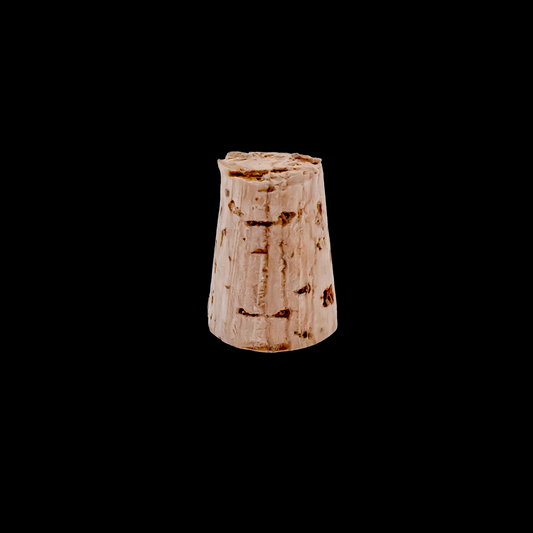
Professional Piercing Cork | Natural Cork & Medical-Grade TPE
Essential piercing cork for safe, professional needle backing during body piercing procedures. Our collection features both 100% natural cork and medical-grade TPE (thermoplastic elastomer) options to suit your studio's needs and preferences. Each cork piece is sized for secure needle grip, preventing accidental needle strikes and protecting both piercer and client during procedures. Natural cork is fully autoclavable for multiple-use sterilisation, whilst TPE cork offers latex-free, consistent-density performance. Available in professional 100-piece bags and cost-effective 1000-piece bulk packs. APP-compliant and trusted by professional piercers nationwide for reliable needle receiving and equipment protection.
What is Piercing Cork & Why It's Essential
Piercing cork serves a critical safety function in professional body piercing: it acts as a needle receiving backstop that prevents the hollow piercing needle from accidentally puncturing the piercer, client, or surrounding tissue after passing through the piercing site.
During a piercing procedure, the piercer inserts a hollow needle through the marked tissue. On the opposite side of the piercing location, a piece of cork is strategically placed to "catch" the needle tip as it exits the tissue. This cork backing serves multiple essential purposes:
Safety Protection - Prevents accidental needle sticks to the piercer's fingers or client's surrounding skin areas, eliminating a major source of bloodborne pathogen exposure risk.
Needle Stability - Holds the needle firmly in place during jewellery insertion, preventing wobble or movement that could enlarge the piercing channel or cause tissue trauma.
Equipment Protection - Prevents needle tips from striking forceps, receiving tubes, or other instruments, which could dull needles or damage tools.
Procedure Control - Provides tactile feedback when the needle fully penetrates tissue, helping piercers gauge depth accurately, particularly important for cartilage piercings.
Professional piercing cork differs significantly from craft or wine bottle cork. Body piercing cork is specifically sized (typically 1/2" x 3/8" or similar dimensions), density-tested to grip needles securely without excessive resistance, and manufactured to maintain integrity through sterilisation processes. This specialised design ensures consistent, reliable performance across all needle gauges from 20g through 8g.
Natural Cork vs. Medical-Grade TPE Cork: Complete Comparison
100% Natural Cork for Piercing
Natural cork is the traditional choice for professional piercers, valued for its organic origin, reliable performance, and autoclave compatibility. Harvested from cork oak trees (primarily Quercus suber), piercing-grade natural cork is processed to achieve consistent density and cleaned for professional use.
Advantages of Natural Cork:
Fully Autoclavable - Natural cork withstands repeated autoclave cycles (typically 5-7 uses before degradation), making it economical for studios performing multiple piercings daily. Can be autoclaved at standard 121°C (250°F) for 15-30 minutes.
Excellent Needle Grip - The cellular structure of natural cork provides excellent friction, holding needles firmly without requiring excessive force to insert. Works reliably with all standard needle gauges (20g-8g).
Biodegradable & Eco-Friendly - 100% natural material breaks down naturally, appealing to environmentally conscious studios.
Cost-Effective for High-Volume Studios - With proper sterilisation, natural cork can be reused multiple times, reducing per-piercing cost for busy studios.
Considerations: Natural cork can occasionally shed small particles, particularly after multiple autoclave cycles. It may also show slight variations in density from batch to batch, being a natural material. Cork should be inspected before each use and discarded if crumbling or showing degradation.
Best For: Studios performing high-volume piercings where autoclaving multiple cork pieces between uses is standard protocol, piercers who prefer traditional materials, environmentally conscious businesses.
Medical-Grade TPE Cork Alternative
Medical-grade TPE (thermoplastic elastomer) cork represents a modern alternative to traditional natural cork, offering consistent performance and unique advantages for specific piercing applications.
Advantages of Medical-Grade TPE Cork:
Unlike natural cork with inherent variations, TPE cork is manufactured to precise specifications, ensuring every piece performs identically.
Latex-Free & Hypoallergenic: Critical for piercers or clients with latex sensitivities. TPE contains no latex proteins, natural rubber, or common allergens.
Zero Particle Shedding: TPE cork never crumbles, flakes, or releases particles into the sterile field, reducing contamination concerns.
Single-Use Convenience: Whilst TPE can technically be autoclaved, most piercers use TPE cork as single-use disposable, eliminating sterilisation time between piercings.
Considerations: TPE cork is typically more expensive per unit than natural cork. Being synthetic, it lacks the eco-friendly biodegradability of natural cork.
Best For: Piercers or clients with latex allergies, studios prioritising zero-particle sterile fields, high-precision procedures where consistent density matters most, single-use disposable supply preference.
Which Cork Should You Choose?
Choose Natural Cork If:
- You autoclave supplies between piercings (reusable cork reduces cost)
- You prefer traditional, proven materials with decades of professional use
- Environmental sustainability matters to your studio values
- You perform high-volume piercings and want cost-effective consumables
- Your studio has no latex sensitivity concerns
Choose Medical-Grade TPE Cork If:
- You or your clients have latex allergies or sensitivities
- You prioritise perfectly consistent density across all cork pieces
- You prefer single-use disposables to eliminate sterilisation steps
- You need zero particle shedding for ultra-clean sterile fields
- You want color-coded organisation options
Many Studios Stock Both: Experienced piercers often keep both natural cork and TPE cork on hand, selecting based on the specific piercing, client needs, or personal preference for that procedure. This flexibility ensures you can meet any client requirement whilst maintaining professional standards.
How to Use Piercing Cork Properly
Correct Cork Placement Technique
Proper cork positioning is fundamental to safe piercing procedures:
Select Appropriate Cork: Choose cork matching your needle gauge and inspect before use for any cracks or crumbling
Position Behind Piercing Site: Place cork directly behind the tissue being pierced, ensuring it's centred with your marking, cork should be close to tissue but not pressed tightly against skin
Stabilise Cork Position: For ear piercings, hold cork with forceps or receiving tube; for body piercings, use assistance or specialised clamps
Pierce Through to Cork: Insert needle through tissue until you feel the distinctive "give" of needle entering cork, confirming full penetration
Maintain Needle in Cork: Keep needle embedded in cork whilst inserting jewellery to stabilise the needle and prevent movement
Remove Safely: After jewellery insertion, carefully extract needle from tissue whilst cork remains attached to needle tip
Sterilising Natural Cork (Autoclave Guidelines)
Natural cork can be autoclaved for reuse following proper sterilisation protocols:
- Inspect Pre-Sterilisation: Examine each cork piece before autoclaving; discard any showing cracks, crumbling edges, or significant degradation
- Cork Replacement Schedule: Cork autoclaved 5-7 times should typically be replaced
- Autoclave Parameters: 121°C (250°F), 15-17 PSI for 15-30 minutes with full drying cycle
- Proper Packaging: Place cork in autoclave pouches with sterilisation indicators; never autoclave loose
- Storage Protocol: Store sterilised cork in sealed pouches until use, labelling with sterilisation date
TPE Cork Note: Whilst TPE cork can withstand autoclaving, most studios treat it as single-use disposable
Cork Lifespan & Replacement Guidelines
Natural Cork:
- New cork: Ideal performance for first 3-4 autoclave cycles
- Moderate use: Cycles 5-7 acceptable with careful inspection
- Replacement needed: After 7-8 cycles or when showing visible degradation
- Immediate discard: Any cork with cracks, holes, or compressed areas
TPE Cork:
- Single-use preferred: Most professionals discard after one use
- Multi-use possible: If autoclaved, 2-3 uses before losing optimal grip
- Visual inspection: Discard if deformed, discoloured, or showing tears
Calculate Your Needs: Track monthly piercings, multiply by 1.2, and stock 2-3 months ahead.
Piercing Cork Applications & Best Practices
Cork for Ear & Cartilage Piercings
Ear and cartilage piercings are the most common cork applications. For earlobe piercings, cork positioned behind the lobe provides firm backing whilst protecting fingers—standard-density cork works perfectly for soft tissue. Cartilage piercings (helix, conch, tragus) require careful positioning to support cartilage without excessive back-pressure, with firmer natural cork often preferred as it resists compression better than softer TPE. Industrial and scaffold piercings benefit from cork positioned at both entry and exit points to stabilise the long needle. Position cork to support cartilage structure without pressing too firmly, which could cause bruising or excessive force requirements.
Cork for Facial & Oral Piercings
Facial piercings involve tighter spaces requiring precise cork placement. For nostril piercings, small cork pieces are positioned inside the nostril—softer TPE cork is sometimes preferred for sensitive internal tissue. Septum piercings require cork positioned to protect the upper lip or nose tip, typically needing an assistant or specialised receiving tube. Lip and labret piercings use cork to protect gums and teeth, positioned carefully to avoid excessive pressure on delicate oral tissue. Cheek and dimple piercings require cork inside the mouth to receive the needle and protect tongue and inner cheek.
Cork for Body Piercings
Body piercings present unique challenges. Navel piercings require cork positioned behind the navel to receive the needle whilst protecting underlying tissue, an assistant or specialised clamp maintains position. Nipple piercings demand cork backing to prevent excessive needle penetration, with experienced piercers using forceps to hold cork securely. Surface piercings need cork at both entry and exit points for surface bars or dermal anchors. Never compromise cork positioning to save time, proper backing prevents serious accidents.
Choosing the Right Piercing Cork for Your Studio
Cork Size & Dimensions Guide
Professional piercing cork comes in standardised sizes optimised for body piercing needles. Standard dimensions typically include:
- Height: 11/16" (17.5mm) or 5/8" (16mm)
- Top Diameter: 1/2" (13mm) or 7/16" (11mm)
- Bottom Diameter: 3/8" (10mm) or 5/16" (8.5mm)
The tapered design provides easy forceps grip, secure needle entry, and versatile sizing for different gauges. Standard size (1/2" x 3/8") works for 95% of piercings and accommodates 20g-10g needles comfortably. Larger cork is occasionally used for very large gauge modifications, though receiving tubes often replace cork for these. Most studios stock one standard size for inventory simplicity.
Quantity Planning: How Much Cork to Stock
Calculate inventory needs by counting average monthly piercings, multiplying by 1.5 (accounting for damaged cork and safety margin), and stocking 2-3 months ahead. For example, a studio performing 200 piercings monthly needs 300 cork pieces monthly (200 × 1.5), equalling 900 pieces for 3 months.
The recommended order is a 1000-piece bulk pack for cost savings, these packs are typically 25-40% cheaper per unit than buying multiple 100-piece bags. Bulk buying ensures supply continuity and simplified ordering with one large quarterly order instead of monthly small orders. New studios should start with 200-300 pieces to establish usage patterns before committing to bulk quantities.
Why Professional Piercers Choose Obsidian Needles for Cork Supplies
When stocking essential piercing supplies like cork, choosing the right supplier directly impacts your studio's efficiency, safety standards, and bottom line.
APP-Compliant Product Selection: Every piercing cork we carry meets professional body piercing standards. We stock only cork specifically processed for body piercing applications with certified medical-grade materials.
Quality Consistency: Batch-to-batch consistency matters with consumable supplies. We source from established manufacturers, ensuring the cork you receive performs identically year-round without unexpected density variations or sizing inconsistencies.
Bulk Pricing & Fast Shipping: Our 1000-piece bulk packs deliver genuine cost savings for professional studios. Located in the US with domestic warehousing, most orders ship within 24 business hours with delivery in 3-5 business days.
Complete Supply Ecosystem: Beyond cork, we carry the full professional piercing setup: needles, forceps, receiving tubes, gloves, sterilisation supplies, skin markers, and aftercare products, simplifying purchasing and reducing shipping costs.
Expert Support: Our customer service team includes experienced body piercing professionals who provide knowledgeable support from people who've actually used these supplies professionally.
Frequently Asked Questions About Piercing Cork
Q: Is TPE cork latex-free?
Yes. Medical-grade TPE cork is completely latex-free and contains no natural rubber latex proteins, making it essential for piercers or clients with latex allergies or sensitivities.
Q: What size piercing cork do I need?
Standard piercing cork (typically 1/2" x 3/8") works for 95% of piercings and accommodates needle gauges from 20g through 8g. Most studios stock only standard size for simplicity.
Q: Can piercing cork be used for all needle gauges?
Standard piercing cork works effectively with gauges from 20g through 8g. Very large gauges (6g-00g) sometimes work better with receiving tubes. For 99% of standard piercings, standard cork provides excellent performance.
Q: How much cork should a new piercing studio stock?
New studios should start with 200-300 pieces to establish usage patterns over 1-2 months. Track usage, then order 2-3 months ahead. Bulk 1000-piece packs offer the best value once patterns are established.
Stock your professional piercing studio with reliable, high-quality piercing cork from Obsidian Needles. Whether you prefer traditional natural cork for autoclavable reuse or medical-grade TPE cork for latex-free, consistent performance, we carry the professional-grade supplies your studio needs. Available in convenient 100-piece bags and cost-effective 1000-piece bulk packs. APP-compliant products trusted by professional piercers nationwide. Questions about which cork suits your studio's needs? Our experienced team is here to help.