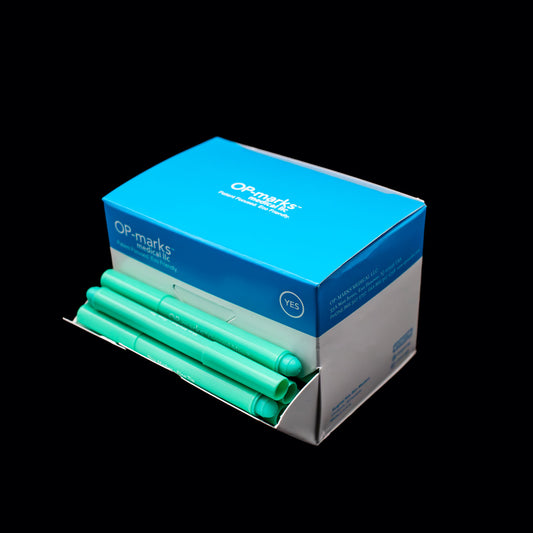
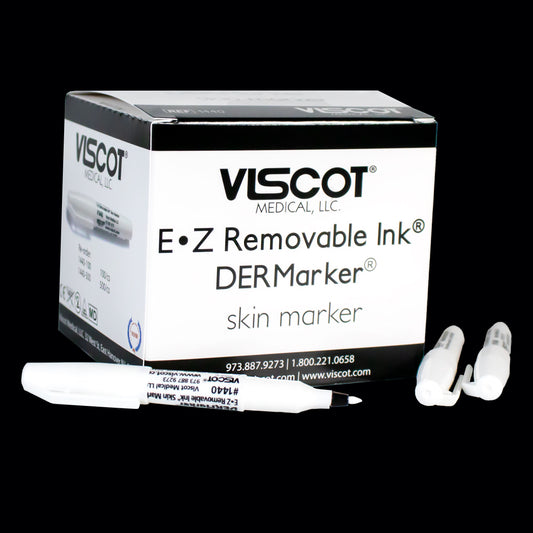
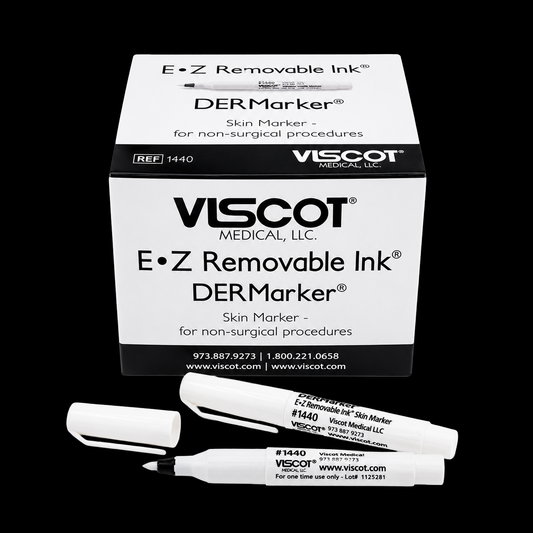
Medical Skin Markers - Professional Surgical Markers for Piercing
Professional-grade medical skin markers designed specifically for body piercing and surgical applications. Our skin safe markers feature FDA-approved gentian violet ink the only ink certified for use on human skin during invasive procedures. Each marker is individually sealed to maintain sterility, with ultra-fine 0.5mm tips for precise placement marking. Whether you're marking ear piercings, body modifications, or surgical sites, these markers provide clear visibility on all skin tones whilst wiping clean with alcohol after your procedure. Available in bulk packs for busy studios. APP-compliant and trusted by professional piercers nationwide.
Professional Medical Skin Markers for Body Piercing
Medical skin markers represent the professional standard for safe, accurate placement marking in body piercing studios. Unlike craft markers, these specialised surgical markers are specifically formulated and approved for direct skin contact during invasive procedures.
The defining characteristic is their gentian violet ink formulation, the only marking ink approved by the FDA for use on human skin. This plant-based, antiseptic ink is non-toxic, hypoallergenic, and carries natural antimicrobial properties.
The ultra-fine 0.5mm tip allows for exact dot placement and symmetrical marking, critical for achieving perfectly aligned piercings. Each marker is individually sealed to maintain sterility until use, preventing cross-contamination between clients and aligning with APP guidelines.
Why Skin Safe Markers Are Essential for Professional Piercers
FDA-Approved Gentian Violet Ink
Gentian violet is the ONLY marking ink approved by the FDA for use on human skin during invasive procedures. This plant-based dye possesses inherent antimicrobial and antifungal properties, making it safer than conventional inks. It's non-toxic, hypoallergenic, and extensively tested for biocompatibility. When you use markers with gentian violet ink, you're using the same marking solution trusted by surgeons worldwide.
Sterility & Infection Control
Medical skin markers address cross-contamination through individual sterile packaging each marker is sealed and sterilised via gamma radiation or ethylene oxide. When you open a fresh marker for each client, you eliminate the risk of transferring pathogens. This single-use approach aligns perfectly with APP standards and exceeds health department requirements in all US jurisdictions.
Precision Placement with Ultra-Fine Tips
A placement off by even 1-2mm can result in asymmetry or jewellery that doesn't sit correctly. Professional medical skin markers feature ultra-fine 0.5mm tips that create exact dots rather than broad marks. This precision is critical for cartilage piercings (helix, conch, tragus), facial piercings (nostril symmetry, labret centring), and paired piercings that must align perfectly.
Visibility Across All Skin Tones
Gentian violet's distinctive purple colour provides superior visibility across the full spectrum of skin tones from very fair to very dark skin. When marking dark skin in particular, gentian violet creates clear, bright contrast that remains visible throughout skin preparation and the piercing procedure, eliminating the frustration of marks disappearing mid-procedure.
APP Compliance & Health Department Requirements
The Association of Professional Piercers specifically recommends single-use, sterile skin markers for all piercing procedures. Health departments require that any implement touching client skin during invasive procedures must be either single-use or sterilised in an autoclave. Since markers cannot be autoclaved, they must be single-use. Using medical-grade skin markers protects you during health inspections.
Choosing the Right Skin Markers for Your Studio
Fine Tip vs. Regular Tip Markers
Medical skin markers typically come in two tip sizes: ultra-fine (0.5mm) and regular (1.0mm).
Ultra-Fine 0.5mm Tips - Best for:
- Precise dot placement for cartilage and nostril piercings
- Facial piercings where symmetry is critical
- Surface piercings with specific entry/exit points
Regular 1.0mm Tips - Best for:
- Body piercings with more flexibility (navel, nipple)
- Marking larger areas or reference lines
- Creating measurement guides
Most professional piercers keep both types on hand, selecting based on the specific piercing location and precision requirements.
Sterile vs. Non-Sterile Markers
Sterile Markers: Individually packaged and sterilised via gamma radiation. Guaranteed free of all microorganisms. Preferred by piercers following strictest APP protocols.
Non-Sterile (Aseptic) Markers: Manufactured in clean environments but not individually sterilised. Still feature gentian violet ink and single-use design. Appropriate for external skin marking.
For maximum liability protection and the highest standard of care, sterile markers are recommended for all applications.
Applications: When to Use Medical Skin Markers
Ear & Cartilage Piercing Placement
Cartilage piercings demand absolute precision. Use medical skin markers to mark exact entry and exit points for cartilage piercings, ensure symmetry when piercing paired locations, indicate angle for piercings requiring specific jewellery sit, show clients proposed placement before committing, and create reference points for industrial barbells. The ultra-fine tip is critical, cartilage anatomy varies greatly between clients, and a 1mm marking error can result in jewellery that sits awkwardly.
Facial & Oral Piercing Precision
Facial piercings are always visible, making placement perfection non-negotiable. Medical skin markers enable precise marking for nostril piercings considering nostril shape and client preference, septum piercings at the sweet spot for centred placement, labret and lip piercings with precise centring relative to the lip line, eyebrow and bridge piercings showing angle and depth clearly, and oral piercings whilst considering anatomy and blood vessel avoidance.
Body Piercing & Surface Work
Body piercings require careful marking. For navel piercings, consider client's anatomy and whether they sit or stand. For nipple piercings, mark for perfect centring and symmetry. For surface piercings, mark exact entry and exit points showing jewellery path. For dermal anchors, mark placement considering clothing and movement.
Medical Skin Markers vs. Alternative Marking Methods
Medical Skin Markers vs. Sharpie/Permanent Markers: Permanent markers contain xylene, toluene, and other solvents never approved for skin contact during invasive procedures. Using these markers introduces unapproved chemicals directly adjacent to the wound you're creating. Additionally, permanent markers aren't single-use sterile implements, violating basic infection control protocols.
Medical Skin Markers vs. Makeup Pencils: Cosmetic pencils are designed for intact skin cosmetic use, not invasive procedures. They lack FDA approval for surgical applications, aren't sterile, and often contain oils or perfumes that could introduce infection risk. The marking precision is also inferior.
The Professional Standard: Medical skin markers represent the gold standard because they combine FDA-approved ink, sterile single-use design, precision tips, and full regulatory compliance in one convenient implement. When health departments inspect your studio, demonstrating you used proper professional implements matters tremendously.
Proper Use & Care of Skin Markers
How to Mark for Optimal Accuracy
Achieving perfect placement starts with proper marking technique. First, evaluate anatomy without marking and discuss placement preferences with your client, considering anatomy limitations and jewellery goals. Have the client sit or stand in natural position, as many piercings look different when anatomy is relaxed versus pulled. Create one clear dot at the exact entry point for cartilage, one dot typically suffices. For paired piercings, use measurement tools for symmetry checking. Always have the client verify placement in a mirror before proceeding. This consultation step prevents dissatisfaction and demonstrates professionalism. If marks smudge during skin prep, re-mark using a fresh marker and never proceed with unclear or smudged marks.
Removal & Cleanup Post-Procedure
After completing the piercing, remove any remaining marks professionally. Use isopropyl alcohol (70%) on a gauze pad to gently wipe marks. Gentian violet removes easily with alcohol, no scrubbing necessary. Clean marking residue before applying aftercare instructions.
Dispose of used markers immediately in biohazard waste. Never attempt to reuse markers between clients. Document marker lot numbers in your procedure records for traceability and ensure client leaves your studio without visible marking residue for a professional appearance.
Storage & Inventory Management
Proper marker storage extends shelf life and maintains sterility. Store markers in original sealed packaging until use and keep in cool, dry location away from direct sunlight. Maintain organised inventory with clear expiration date tracking.
Use FIFO (first in, first out) rotation to prevent expiration waste. Keep minimum 3-month supply on hand for busy studios and separate sterile and non-sterile markers clearly if stocking both types. Track usage rates monthly to optimise reorder timing.
Why Professional Piercers Choose Obsidian Needles for Skin Markers
When building a professional piercing studio or restocking essential supplies, choosing the right supplier matters as much as choosing the right products. Obsidian Needles has earned the trust of professional piercers across the United States through our unwavering commitment to quality, safety, and service.
APP-Aligned Product Selection: Every medical skin marker we carry meets or exceeds Association of Professional Piercers guidelines. We stock only markers with FDA-approved gentian violet ink, individually sealed packaging, and appropriate sterility documentation. We don't carry craft store alternatives, our catalogue represents the professional standard.
Fast Shipping: We guarantee same-day shipping for all orders received by 2pm (Mon–Fri). With domestic warehousing, you can expect reliable delivery to any US location within just 3-5 business days. Further details can be found in our Shipping policy.
Complete Supply Ecosystem: Beyond skin markers, we carry the full range of professional piercing implements: needles, forceps, receiving tubes, gloves, sterilisation supplies, and aftercare products. Consolidating your supply orders simplifies purchasing and reduces shipping costs.
Expert Support & Quality Assurance: Our customer service team includes experienced body piercing professionals. Every product batch includes documentation tracing back to the manufacturer. We maintain relationships with established medical supply manufacturers, never sourcing from questionable overseas vendors. Your professional reputation depends on supply quality, we take that responsibility seriously.
Frequently Asked Questions About Medical Skin Markers
Q: What makes medical skin markers different from regular markers?
Medical skin markers use FDA-approved gentian violet ink certified for invasive procedures. Regular markers contain unapproved solvents. Medical markers are individually sealed, single-use, and sterile, preventing cross-contamination.
Q: How many markers does a typical piercing studio use monthly?
A moderately busy studio (100-150 piercings monthly) uses 150-225 markers monthly. Calculate by tracking piercings and multiplying by 1.5x. Purchasing 100-packs provides adequate 3-month supply for most studios.
Q: How long do the marks last? How do I remove them?
Marks remain visible 15-30 minutes throughout procedures. Remove easily with isopropyl alcohol (70%) on gauze, no scrubbing needed. If untreated, marks gradually fade over 1-2 days naturally.
Q: What tip size should I choose: fine (0.5mm) or regular (1.0mm)?
For cartilage and facial work, ultra-fine 0.5mm tips provide necessary precision. Regular 1.0mm tips suit body piercings with more anatomical flexibility. Most piercers keep both sizes available.