



Medical Instrument Cleaner for Piercing Studios
Every piercing studio that reprocesses reusable stainless steel tools needs a dependable medical instrument cleaner as part of its daily workflow. This collection of instrument cleaners and cleaning solutions helps studios remove organic residue, protect metal surfaces, and prepare tools properly before autoclave sterilization. From concentrated liquid formulas to specialty stain removers, every product here supports a safe and consistent reprocessing routine for professional studios.
What Do These Cleaning Products Actually Do?
Understanding the role a cleaning solution plays helps studios build a reliable decontamination routine before every sterilization cycle. Before comparing formulas or brands, it helps to know exactly what this category covers and how it fits into daily studio operations.
Definition and role in the reprocessing workflow
A medical instrument cleaner is used to remove blood, tissue, and other organic debris from reusable tools before they are sterilized. This cleaning step happens after use and before autoclaving, since even the most advanced autoclave cannot properly sterilize a tool that still carries visible soil or protein residue on its surface. This is why every professional reprocessing workflow treats cleaning as a separate, mandatory stage rather than an optional extra step.
Cleaning vs sterilizing: what is the difference
Cleaning and sterilizing are two separate steps, though they are often confused. A quality instrument cleaner physically removes debris and biological matter from a tool, while sterilization uses heat, pressure, or gas to destroy any remaining microorganisms. Skipping the cleaning step and relying on the autoclave alone can leave a tool improperly sterilized, since baked on residue can shield bacteria from heat and steam during the cycle.
Enzymatic versus non enzymatic formulas
Enzymatic cleaning formulas use protein digesting enzymes to break down blood and tissue, making them effective on heavily soiled tools. Non enzymatic formulas rely on detergents and surfactants instead, offering a gentler option for lightly soiled instruments or delicate materials. Many studios keep both types on hand depending on how a tool was used during the day.
Benefits of Choosing a Reliable Medical Instrument Cleaner
Choosing the right cleaning formula brings measurable advantages for both instrument longevity and studio safety, and these benefits become more noticeable the longer a tool stays in active rotation.
- Protects instrument surfaces from corrosion and pitting, since a neutral pH, phosphate free formula prevents the kind of chemical damage that gradually weakens stainless steel over repeated cycles.
- Improves autoclave sterilization outcomes, because starting with a properly cleaned surface means steam and heat can reach every part of the instrument during the sterilization cycle.
- Reduces bioburden and cross contamination risk between uses, which is especially important for tools that come into direct contact with broken skin.
- Saves money over time with concentrated formulas, since a small bottle of surgical instrument cleaning solution can produce many gallons of working solution.
Applications: Where These Solutions Are Used
A medical instrument cleaner is used any time a studio reprocesses reusable tools such as forceps, clamps, and other stainless steel instruments before autoclaving. These formulas are used for manual soaking at the sink, for pre-treatment immediately after a procedure, and inside ultrasonic cleaning units that agitate the solution to reach small crevices and hinges. Many studios also use a dedicated stain remover periodically to keep older instruments looking and performing like new, since discoloration can build up gradually even with a consistent cleaning routine.
Types of Products in This Collection
This collection is organized around the different stages and methods of reprocessing that a professional studio relies on every day.
Manual soak and pre-treatment solutions
These formulas are designed for immediate use at the point of care, helping to prevent blood and tissue from drying onto a tool before it reaches the cleaning station. A short soak keeps organic material soft and easy to remove during manual scrubbing.
Ultrasonic cleaning solutions
Ultrasonic formulas are designed to work with the cavitation process inside an ultrasonic unit, where high frequency sound waves generate tiny bubbles that dislodge debris from hard to reach areas like hinges and joints. A dependable cleaning formula suited for ultrasonic use helps studios get consistent results cycle after cycle.
Concentrated professional formulas
Concentrated formulas, including the Miltex Surgical Instrument Cleaner, offer a super concentrated, neutral pH solution suited to both manual and ultrasonic use, giving studios one reliable product for multiple cleaning methods.
Stain and tarnish removers
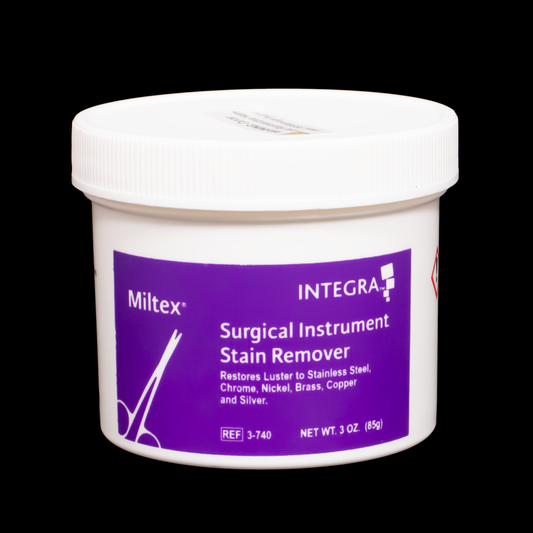
A dedicated Miltex Surgical Instrument Stain Remover restores the appearance of instruments that have picked up discoloration from water minerals, detergents, or repeated autoclave cycles, helping tools look and feel professional for longer.
How to Choose the Right Medical Instrument Cleaner
Selecting the right instrument cleaning solution depends on your cleaning method, the condition of your instruments, and how often your studio reprocesses tools. A thoughtful choice here protects your investment in quality stainless steel instruments over the long run.
- Check that the formula has a neutral pH and is phosphate free, since these two qualities reduce the risk of corrosion and pitting over repeated cycles.
- Match the cleaner to your equipment, choosing a solution rated for ultrasonic use if your studio runs an ultrasonic cleaner, or a manual soak formula if you primarily clean by hand.
- Look for a biodegradable, residue free formula that rinses away completely, so no chemical residue remains before instruments go into the autoclave.
- Keep a stain remover on hand for periodic deep cleaning, especially if your studio notices discoloration building up on frequently used tools.
Compatibility with Different Instrument Materials
Not every cleaning formula suits every material found in a piercing studio. Stainless steel forceps and clamps generally tolerate a wider pH range than titanium jewelry or delicate polymer handled tools, so it helps to check a product label before using it on anything beyond standard surgical steel instruments. A neutral pH, non abrasive cleaning formula is the safest default choice when a studio works with a mix of materials, since it minimizes the risk of dulling a polished surface or reacting poorly with a specific alloy.
How Often Instruments Should Be Cleaned
Every instrument that touches skin or bodily fluid should be cleaned immediately after use, rather than left to sit until the end of a shift. Waiting too long allows organic material to dry onto the surface, which makes it significantly harder to remove later and can leave residue behind even after a full cleaning cycle. Studios that build point of use cleaning into their standard workflow, rather than treating it as an occasional task, tend to get more consistent results from both their cleaning formulas and their autoclave, with fewer instruments needing rework before they can safely be returned to service.
Common Mistakes to Avoid During Instrument Cleaning
A few small mistakes account for most of the problems studios run into with their reprocessing routine. Letting instruments sit unwashed for too long after a procedure allows organic material to dry and harden, which then requires extra scrubbing or a longer soak to fully remove. Overloading an ultrasonic unit is another common issue, since instruments packed too tightly can block the cavitation waves from reaching every surface evenly. Mixing incompatible chemicals, such as combining a cleaning formula with an unapproved disinfectant, can also damage instrument surfaces or reduce the effectiveness of either product. Reviewing these habits periodically with staff helps a studio avoid rework and keeps every tool performing the way it should.
Who Should Use These Products
Piercing studios that maintain a set of reusable stainless steel tools benefit directly from a dependable medical instrument cleaner, since these products are the first line of defense against corrosion and improper sterilization. Studios running an in-house ultrasonic cleaner alongside an autoclave need a formula compatible with both methods to keep their full decontamination workflow consistent. Mobile piercers and studios with limited storage space also appreciate concentrated formulas, since a single bottle can replace several bulkier products while still covering manual and ultrasonic needs.
Storing and Handling Cleaning Solutions
Proper storage keeps every formula effective and safe to use throughout its shelf life. Concentrated products should be stored at room temperature, away from direct sunlight, and tightly sealed between uses to prevent evaporation or contamination. It also helps to label diluted working solutions with the date they were mixed, since most formulas have a limited working life once diluted and should be discarded and replaced on a regular schedule rather than reused indefinitely.
Building a Consistent Decontamination Routine
A dependable decontamination routine keeps every reusable tool moving through the same predictable steps, from point of use pre-treatment to a final rinse before autoclaving. Studios that document this process, including which formula is used at each stage and how long instruments should soak, tend to see fewer inconsistencies during health inspections. Training every team member on the same routine also reduces the chance that a tool skips a step during a busy shift, which matters just as much as the quality of the cleaning formula itself.
Documenting Your Cleaning Process for Compliance
Keeping a simple written record of when instruments are cleaned, which formula was used, and how long they soaked gives a studio a clear reference during a health inspection or an internal review. This kind of documentation does not need to be complicated. A basic log with dates, batch or lot information from the cleaning product, and the initials of the staff member responsible is usually enough to demonstrate a consistent, professional routine. Over time, this record can also help identify whether a particular tool or material needs a different cleaning approach.
Best Selling Products in This Collection
Some of the most reordered items in this collection include our concentrated Miltex formula for everyday manual and ultrasonic cleaning, alongside the Miltex Surgical Instrument Stain Remover for restoring shine to older tools. Studios that pair these with our Infection Control collection maintain a complete, professional decontamination routine from cleaning through to sterilization.
Why Choose Obsidian Needles for Instrument Cleaners and Cleaning Solutions
Obsidian Needles selects every formula in this collection to professional standards, so studios can trust each bottle to perform consistently across manual and ultrasonic cleaning methods. Our Piercing Tools collection is manufactured to work seamlessly with the same decontamination routine, giving studios a complete, dependable supply chain from a single source. Consistency across every order means piercers always know what to expect when a new bottle arrives, which builds long term trust between studio and supplier.
FAQ
Is a cleaning formula the same as a sterilizing solution?
No. A medical instrument cleaner removes organic debris and soil from a tool, while sterilization uses heat, pressure, or gas to destroy microorganisms afterward. Both steps are necessary and neither replaces the other.
Can this formula be used in an ultrasonic cleaner?
Yes, concentrated Miltex formulas are designed to work safely in both manual soak and ultrasonic applications.
Is it safe for stainless steel piercing tools?
Yes, a neutral pH, phosphate free medical instrument cleaner is formulated specifically to protect stainless steel and similar metal surfaces from corrosion and pitting.
Do you need to rinse instruments after cleaning?
Yes, instruments should be rinsed thoroughly with clean water after using any cleaning formula and before proceeding to autoclave sterilization, so no chemical residue remains on the surface.
Do you offer wholesale pricing for studios?
Yes, Obsidian Needles offers wholesale pricing exclusively for licensed professional piercers, with bulk ordering available on our most used cleaning solutions.